Rangjung Yeshe Shenpen
A volunteer-based, non-profit organisation helping the poor and disadvantaged in Nepal
  • Home
  • About
  • Programs
  • Principles
  • Structure
  • Donate
  • Contact Us
  • Links
  • Newsletters
Rangjung Yeshe Shenpen
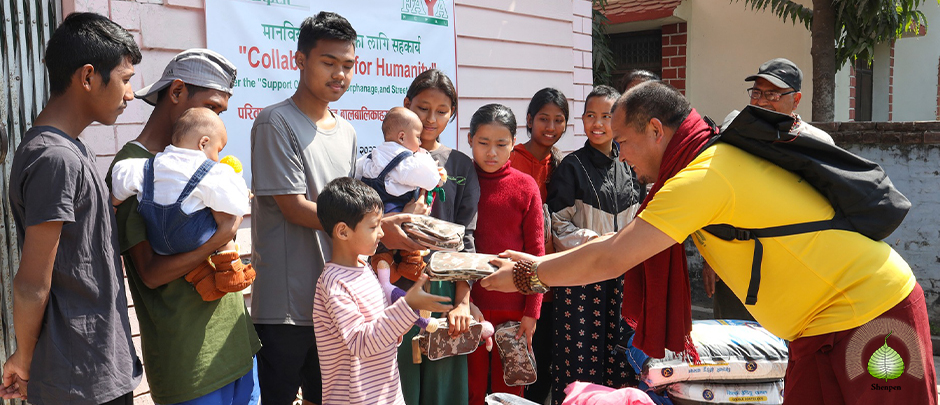
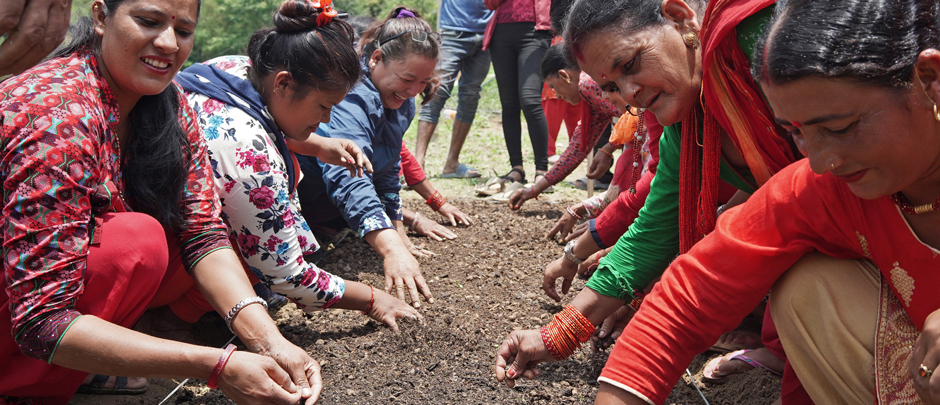
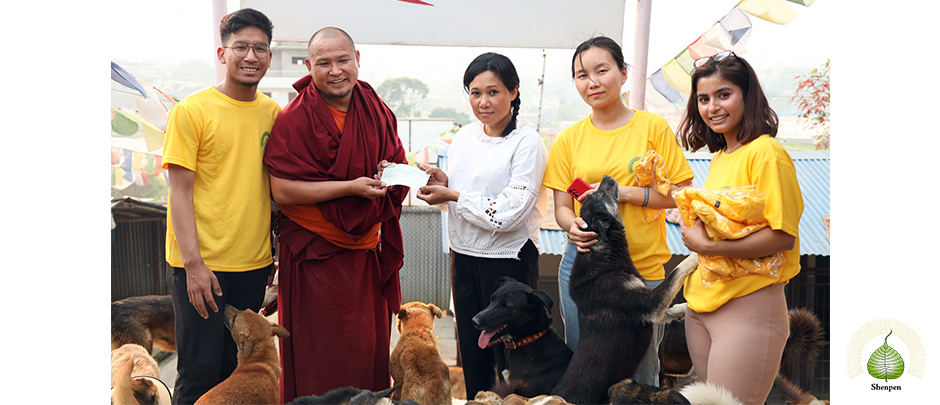
is a volunteer-based, non-profit organization established to alleviate poverty and to address social challenges, mainly in Nepal. Founded in 2004 by Chökyi Nyima Rinpoche and working under his regular direction, Shenpen focuses on helping the poor and disadvantaged gain access to health care, education and employment opportunities. It offers support to the elderly and street children, and works to improve the treatment of animals.
Based in Boudhanath, Nepal, Shenpen provides technical and financial support to trusted organizations with strong track records that work directly with poor communities. Shenpen also helps strengthen these organizations so they are better able to meet their long-term objectives.
Shenpen uses the skills and resources of its members and associates to identify where services are most needed, and aims to benefit as many people as possible with the resources available. It also has a strict policy of keeping its overhead at a bare minimum.
Since its inception Shenpen has sponsored over 100 projects across Nepal.
Health: Promoting good health care to disadvantaged people in Nepal
Bagwati Khadka
Bagwati and her husband, now stationed at the police post in Naya Pati, come from Dolka, a hilly region east of the Kathmandu Valley. When Bagwati arrived to Kathmandu four years ago she received a letter from WCS about offering loans for creating business...
Read More
Give a Gift
By supporting Shenpen you provide the poorest people in Nepal with vital services such as skills training, healthcare, and education. Your support helps fight poverty and will build them a better future.

Notice: Undefined index: browser in /var/www/clients/client1/web15/web/class/Home.php on line 132
Make A Donation
About RYS
Shenpen was founded as a non-profit social work organization by Chökyi Nyima Rinpoche in 2004. The transliterated meaning of Shenpen comes from two Tibetan words: Shen (others) and phen (to benefit). Its purpose is therefore to 'benefit others'.
The organization's vision is that all poor and disadvantaged people of Nepal, especially the very young, very old and displaced, enjoy good health, a sound education, financial security and are able to meet their full human and spiritual potential. This social work activity involves members, friends, and associates of Rangjung Yeshe worldwide.
When H.E. Chökyi Nyima Rinpoche first arrived in Nepal more than forty years ago, he was deeply struck by the great kindness shown to the newly arrived Tibetan refugees by the Nepalese people. They warmly opened their arms and helped the exiled Tibetans build new lives. Since then, Rinpoche has worked tirelessly to benefit the poor and needy of Nepal.
H.E. Chökyi Nyima Ripoche serves as Shenpen's Founding President while his brother, Tsikey Chokling Rinpoche, serves as Shenpen's Vice-President, and his nephew, Kyabgon Phakchok Rinpoche, serves as the Chair of a Management Committee comprised of local volunteers and a part time program coordinator, all with knowledge and experience of Nepal and of development work. Shenpen currently works in the following six thematic areas:
  • Education
  • Health
  • Street Children
  • Skills Training
  • Care for the Elderly
  • Animal Welfare

  • Between 2004 and 2010 the organization funded over 100 small projects at an average cost of $1700 per project. The main funding sources for these activities have been from C.H.A.N.C.E. for Nepal (UK), Tashi Delek, Germany, and public donations.
    • Bagwati Khadka
    • Sabina Pohkrel
    • Laxmi Karki
    • Success Stories:
    Bagwati Khadka
    Vegetable Farming
    Bagwati Khadka was not at her farm the day we arrived, as she had to be with someone in the hospital, so her brother-in-law, Deepak Khadka, showed us around the farm and told us her story.
    Bagwati and her husband, now stationed at the police post in Naya Pati, come from Dolka, a hilly region east of the Kathmandu Valley. When Bagwati arrived to Kathmandu four years ago she received a letter from WCS about offering loans for creating businesses. She decided to take a loan of 10,000 rs (89 GBP) to open and run a small shop. It took time for her to see that the shop was not making a good profit, so she opted to invest in vegetable and poultry farming.
    A year and a half ago, Bagwati took a three-day, Level One vegetable farming training offered by WCS (Women Cooperative Society). Shortly after this she and her husband rented two and half ropanis of land to begin her farming. Since this land is run down and only used to grow mustard seed plants, it will take Bagwati some time to cultivate the land.
    Bagwati took a loan of 400,000 rs (3,571 GBP) - only 35,000 of which was from WCS, the rest from a local bank. She used this money to invest in vegetable farming, poultry farming, land rental, digging a well and fertilizers.
    Deepak helps carry the vegetables to local markets in Jorpati, near Boudha, where they sell potatoes, garlic, beans, onions, spinach, buck beans, cauliflower and cabbage. Deepak does not know what profits have been made on selling vegetables, but knows that the poultry farming is yet to make a profit, as the losses have canceled out any gains.
    I encouraged Deepak to tell his sister-in-law to take the poultry farming and Advanced Level class on vegetable farming so she can learn more about making her investments work for her.
    Return to Skills Training
    Sabina Pohkrel
    Vegetable Farming
    We were met above a most expansive and impressive field by Sabina Pohkrel, who was holding her curved knife in her hand, a symbol of a farming woman in Nepal. She looked like many Nepali woman who work their farms. She is thin, strong, determined. Sabina is a fortunate one, as she has family land in a rural setting not far from the large city of Kathmandu. She took the three-day Level One training - offered by WCS (Women Cooperative Society) in April 2010, where she learned that there is more profit in growing potatoes than the rice she previously grew. Before this training, Sabina said that she knew nothing about vegetable farming. She just did what those before her did.
    Since she had her own land, her own seeds and homemade fertilizer she only had to invest a little money in urea (an organic fertilizer), some additional vitamins for the plants, and the wages of laborers to prepare the land.
    She has already earned 100,000 rs (892 GBP) selling her first crop of potatoes – grown on 5 ropanis of land-, and 9,000 rs (80 GBP) selling bean seeds from plants she grows on 2 ropani of land. Sabina can grow two crops of potatoes a year, one of bean seeds, and one of rice. People come to her to buy the potatoes, so she does not have to pay for any transport costs.
    Sabina would like to take the 7 day vegetable farming training, which can happen when funding comes in to support it.
    Return to Skills Training
    Laxmi Karki
    Goat Raising
    I visited Laxmi Karki at her home in NayaPati, a small village on the road leading from Boudha, Jorpati to Sundarijal, the set-off point for many treks into the Helambu/Langtang region of northern Nepal. Laxmi is 60 years old and has raised goats all of her life. As a child, young woman and adult, she and her family knew nothing about raising goats. They just followed the ways of those before them, feeding them what they now know is not the best of food, and never thinking to offer anything but Ganja as a medicine when goats had diarrhea.
    Laxmi joined her local WCS branch office ten years ago, then quit, then rejoined. She decided to take a loan of 6000 rs (54 GBP) to begin raising goats. Soon afterwards, WCS began offering goat-raising training and she decided to take the first level, a three-day course. Laxmi now needs to take the 7-day advanced level training, which WCS can only offer with further funding.
    Laxmi's eleven goats - 7 males and 4 females - go to the pasture daily to eat the local grass, but Laxmi also needs to prepare a mixture of corn, wheat and rice that her goats eat three times a day. Laxmi spends about 13 GBP a month on this food, and 11GBP a month on medicine for her goats.
    The gestation period for goats is 3 months, so if she is smart and fortunate, Laxmi can raise many goats and make a good profit. After her training she sold 8 goats for a total of 50,000 rs, or 450 GBP. Male goats sell for more than female goats, which are mostly used for breeding.
    Return to Skills Training
    Success
    Working Principles
    At the heart is a spirit of volunteerism that is impartial, non-sectarian and non-political. Its ethos is based on the principles of compassion, generosity, knowledge, diligence, and humility in thought and action.
    Shenpen operates in accordance with the following principles:
  • Starting small, but in clear, practical ways that produce tangible and sustainable benefits for the poorest
  • Supporting the existing initiatives of other specialists and reputable organizations, thereby ensuring the effective uses of Shenpen resources.
  • Selecting projects that meet clear social needs and in which the beneficiaries participate wherever possible, in the design, implementation, monitoring, and evaluation of activities.
  • Supporting long-term initiatives that are able to demonstrate consistency of impact over time.
  • Supporting initiatives that are cost effective and that benefit the maximum number of poor at a minimum cost.
  • Linking with like-minded international charities to harness resources and collaborate in providing on-the-ground support to poor individuals and communities.
  • Shenpen Structure
    President & Founder
    H.E. Chökyi Nyima Rinpoche
    Vice President
    Kyabje Tsikey Chokling Rinpoche
    Management Committee
    Kyabgön Phakchok Rinpoche
    Roger
    Vice Chair
    Martha
    Project Coordinator
    Program Chairs
    Carrie
    Health
    Bijay
    Education
    Greg
    Skills Training
    Tracy
    Street Children
    Tina
    Animals
    Roger
    Elderly
    For further details or to contact a committee member directly, please click on the image.
    Give a Gift
    By supporting Shenpen you provide the poorest people in Nepal with vital services such as skills training, healthcare, and education. Your support helps fight poverty and will build them a better future.
    Giving a gift to Shenpen is giving a gift that will ultimately support a whole village.
    When you help a mother regain her health by supporting Shenpen Health, that funding will eventually benefit her whole family. As the women, or men, regain their health then they can return to their family or outside jobs and provide for their whole family.
    When you sponsor a child's education, or the Sath Sath Learning Center in any way, your funds will eventually return to Nepal, because one more educated person will one day make Nepal a better place.
    When you contribute to a woman's skills training the rewards of this investment will be multiple, but mostly that woman can then provide better for her family, and more than likely educate her own children.
    Offering a safe and healthy environment to the elderly, snacks to street children, better health to burn victims, or rabies shots to dogs all ultimately bring support to the whole community. Whatever your gift, you are assured that all of it goes directly to your chosen designation.
    Browse Donations
    Contact Us
    Interested to know more about Rangjung Yeshe Shenpen? Contact us using the form below. Alternatively you can contact us via our post address or telephone number which can be found at the bottom of this page.
    Send a message
    Name
    Email
    Submit
    Links
    C.H.A.N.C.E. for Nepal
    C.H.A.N.C.E. for Nepal (Children's Health and Nutrition, Care and Education) is a registered charity founded by Barbara Datson in 2006 with the explicit aim of helping children in Nepal who are sick, orphaned, handicapped, or underprivileged.
    Their mission is to improve children's health, education and wellbeing by promoting and sponsoring high quality medical care in hospitals, orphanages and schools. Their medical support in Nepal mainly focuses on primary health care. They believe that prevention should be concurrent with acute care. The medical checks in the orphanages and schools are targeted at identification, detection and treatment.
    Website URL: www.chancefornepal.org/about.html
    Tashi Deleg, Germany
    Tashi Delek is a charitable (Non-Profit) Society with the mission to support selected Tibetan monasteries in exile. Monasteries with a genuine study and practice discipline are particularly worthy of support since the ordained sangha is the basis for keeping the rich Tibetan culture, religion and philosophy. Therefore Tashi Delek supports young monks and nuns during their Shedra studies with food, clothing, medicine and books.
    Website URL: www.ulli-olvedi.gmxhome.de/tashidelek.index.htm
    Sath Sath
    SathSath is a registered NGO that works together with street children in Nepal.
    They assist the children in developing skills, build confidence and learn how to use their rights in society.
    SathSath operates three drop-in-centers in Kathmandu. These centers offer a safe environment for the children to learn, play and receive support and services to improve their quality of life.
    Website URL: www.sathsath.org
    Mindful Medicine Worldwide
    Mindful Medicine Worldwide is a non-profit organization established in 2009, which seeks to bring long-term integrative health care to people of developing areas, domestically and internationally, by establishing and operating integrative health care clinics. Our professional volunteer practitioners provide medical services and healthcare education to our patients as well as create sustainable health practices by educating local lay people to be integrative health workers within their communities. Mindful Medicine Worldwide is rooted in a practice of mindfulness, education, research and training.
    Website URL: www.mindfulmedicineworldwide.org
    Street Dog Care
    The Street Dog Care Centre in Kathmandu, Nepal provides daily intensive care for emergency cases, such as car accidents, severe infections and open wounds. The SDC team also provides regular medical treatment camps each Saturday in various sites in the city.
    Website URL: www.streetdogcare.org
    KAT Centre
    More than 20,000 dogs live on the streets of Kathmandu, Nepal, and many suffer from starvation, infected open sores, mange, and other injuries and illnesses.
    The Kathmandu Animal Treatment Centre (KAT Centre) is a non-profit registered charitable organization that is using humane and effective methods to create a healthy, rabies-free, non-breeding street dog population.
    Website URL: www.katcentre.org.np
    Acupuncture Relief Project is a free community acupuncture clinic that travels to countries that have been impacted by poverty, conflict or disaster. Their current primary clinic project is located in Champagoan, Nepal and villages in the surrounding area.
    Website URL: www.acupuncturereliefproject.org
    RYS Newsletters
    Newsletter 2009
    Newsletter 2008
    Newsletter 2007
    Newsletter 2006
    Contact Martha Ambrose at:
    Rangjung Yeshe Shenpen
    PO Box 21277
    Kathmandu, Nepal
    Telephone: +977(984)1349569
    E-mail: enquiries@shenpennepal.org
    © 2010 Rangjung Yeshe Shenpen